
Laparoscopic Surgery
Laparoscopic Surgery
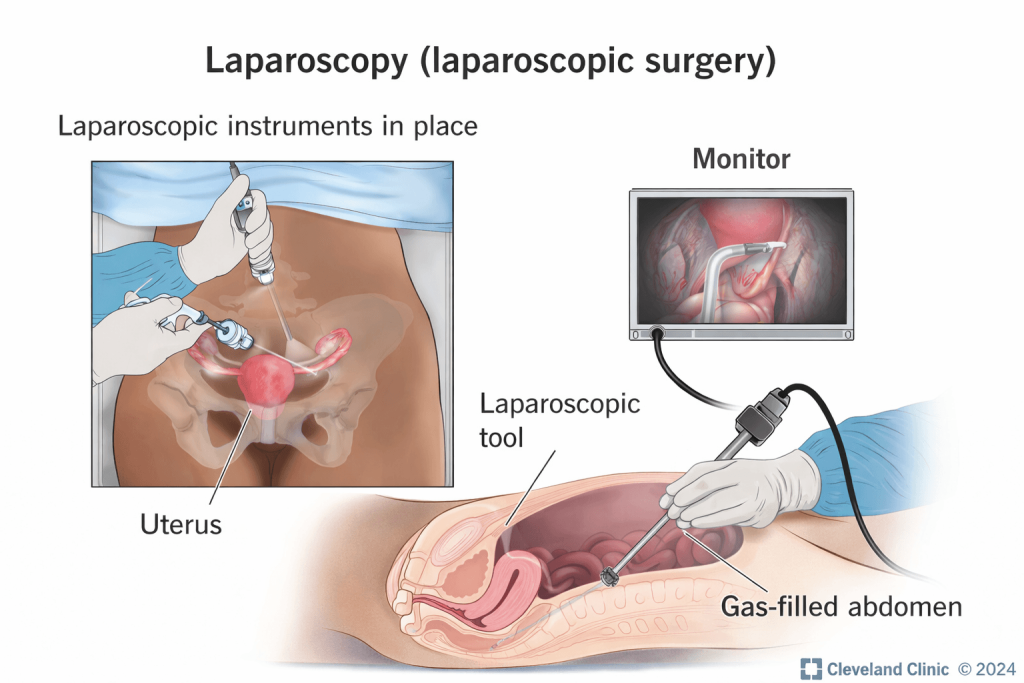
Laparoscopic surgery, also known as minimally invasive or keyhole surgery, is an advanced surgical technique performed using small incisions, a camera (laparoscope), and specialized instruments.
This approach allows surgeons to view and operate inside the body with high precision while minimizing trauma to surrounding tissues. It is widely used for various abdominal and gastrointestinal procedures.
When is Laparoscopic Surgery Used?
Laparoscopic surgery is commonly recommended for:
- Gallbladder removal (gallstones)
- Hernia repair
- Appendix removal
- Liver and pancreatic procedures
- Intestinal surgeries
- Diagnostic procedures
Procedure Overview
- Small incisions are made in the abdomen
- A laparoscope (camera) is inserted
- Carbon dioxide gas is used to expand the area
- Surgical instruments are used to perform the procedure
- Incisions are closed with minimal scarring
Benefits of Laparoscopic Surgery
- Smaller incisions and minimal scars
- Less pain after surgery
- Reduced blood loss
- Faster recovery and shorter hospital stay
- Lower risk of infection
- Early return to normal activities
Recovery & Aftercare
Recovery is generally quicker compared to open surgery.
- Hospital stay: Often same day or 1–3 days
- Resume daily activities within a few days
- Follow prescribed diet and medications
- Regular follow-up as advised
Risks & Complications
- Infection
- Bleeding
- Injury to nearby organs (rare)
- Conversion to open surgery in complex cases
These risks are minimal when performed by experienced surgeons.
Why Choose Us?
- Expertise in advanced laparoscopic procedures
- Modern surgical equipment and technology
- Patient-focused care and faster recovery plans
- High success rates with minimal complications