
Liver Resection
Liver Resection
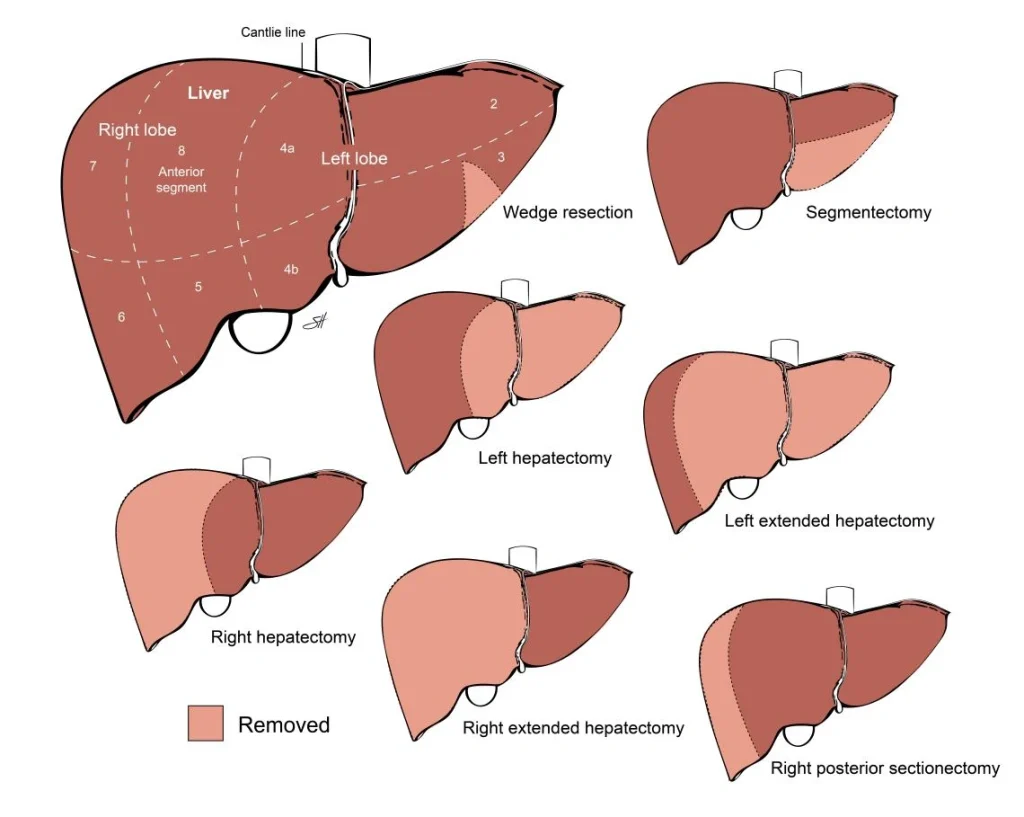
Liver resection, also known as hepatectomy, is a surgical procedure to remove a portion of the liver affected by tumors, cysts, or other diseases. It is one of the most effective treatments for both benign and malignant liver conditions.
The liver has a unique ability to regenerate, allowing the remaining healthy portion to grow and restore normal function after surgery.
When is Liver Resection Needed?
Liver resection is recommended in the following conditions:
- Liver cancer (Hepatocellular carcinoma)
- Metastatic liver tumors (spread from other organs)
- Benign liver tumors
- Liver cysts or abscesses
- Selected cases of liver trauma
Types of Liver Resection
1. Partial Hepatectomy
Removal of a small portion of the liver.
2. Lobectomy
Removal of an entire lobe of the liver.
3. Extended Resection
Removal of a larger portion in advanced disease cases.
Surgical Approaches
- Open Surgery – Traditional method for complex cases
- Laparoscopic Surgery – Minimally invasive with faster recovery
- Robotic-Assisted Surgery – Enhanced precision and control
Benefits of Liver Resection
- Effective removal of tumors
- Potential cure in early-stage liver cancer
- Improved survival rates
- Relief from symptoms
- Preservation of healthy liver function
Recovery & Aftercare
Recovery depends on the type of surgery and patient condition.
Key Points:
- Hospital stay: 5–10 days
- Gradual return to normal activities
- Regular follow-up and imaging
- Nutritional and lifestyle management
Risks & Complications
- Bleeding
- Infection
- Bile leakage
- Temporary liver dysfunction
👉 With experienced surgeons, complications are minimized and outcomes are improved.
Why Choose Us?
- Expertise in advanced liver surgeries
- Minimally invasive & robotic techniques
- Multidisciplinary care approach
- Personalized treatment planning