
Gallbladder Disease
Gallbladder Disease
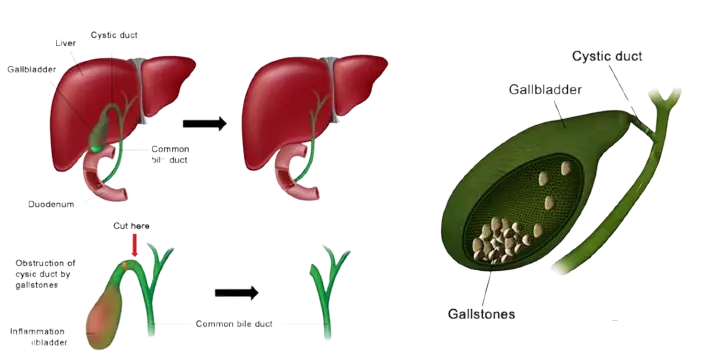
Gallbladder disease refers to a range of conditions that affect the gallbladder, a small organ responsible for storing bile to aid digestion. Problems in the gallbladder can disrupt digestion and cause significant discomfort if not treated in time.
With early diagnosis and proper treatment, most gallbladder conditions can be effectively managed or cured.
Common Types of Gallbladder Disease
Gallstones (Cholelithiasis)
Formation of hardened deposits in the gallbladder, often causing pain and blockage.
Cholecystitis
Inflammation of the gallbladder, usually due to gallstones.
Bile Duct Stones
Stones that move into the bile duct, leading to obstruction.
Gallbladder Polyps
Growths in the gallbladder lining, usually benign but require monitoring.
Causes & Risk Factors
- High-fat diet
- Obesity
- Sedentary lifestyle
- Rapid weight loss
- Diabetes
- Family history
Symptoms
Symptoms may vary depending on the condition:
- Severe abdominal pain (especially after meals)
- Nausea and vomiting
- Bloating and indigestion
- Jaundice (in case of blockage)
- Fever (in infection cases)
Diagnosis
- Ultrasound (most common test)
- Blood tests
- CT scan or MRI (in selected cases)
- Endoscopic procedures if needed
Treatment Options
Medical Management
- Pain relief medications
- Antibiotics (for infection)
- Dietary modifications
Surgical Treatment
- Laparoscopic gallbladder removal (cholecystectomy)
- Open surgery in complex cases
Complications
- Infection
- Bile duct blockage
- Pancreatitis
- Gallbladder rupture (rare but serious)
Prevention
- Maintain a healthy weight
- Eat a balanced, low-fat diet
- Stay physically active
- Avoid rapid weight loss
- Regular health checkups